 Suomi
 Svenska
Giant hogweed
Heracleum mantegazzianum
Identify the giant hogweed from a photo and log your finds with Florapass.
Coming soon to the App Store and Google Play.
Invasive alien species – remove it if you can
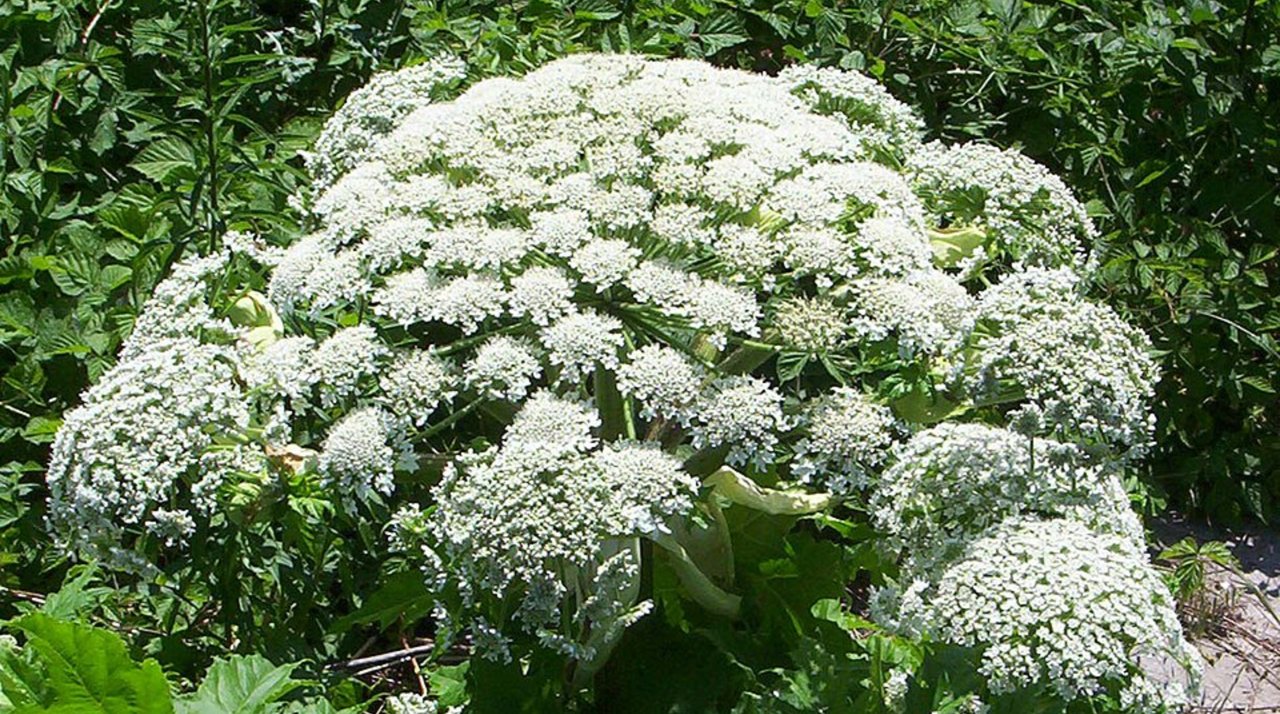
Giant hogweed is an enormous, showy plant from the Caucasus that has escaped from gardens and become invasive. It has huge white, flat-topped flower clusters and very large leaves. Warning: its sap reacts with sunlight and can cause severe skin burns—do not touch. You may see it forming dense stands along roadsides, riverbanks and waste ground.
Did you know?
- Listed as a harmful invasive species throughout the EU.
- One plant can produce tens of thousands of seeds.
About the species
Identification
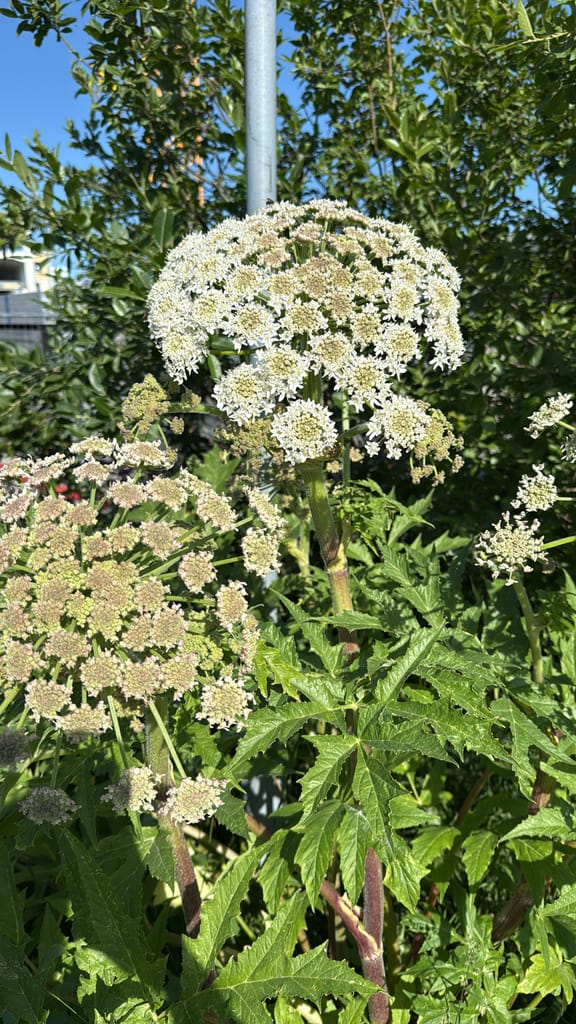
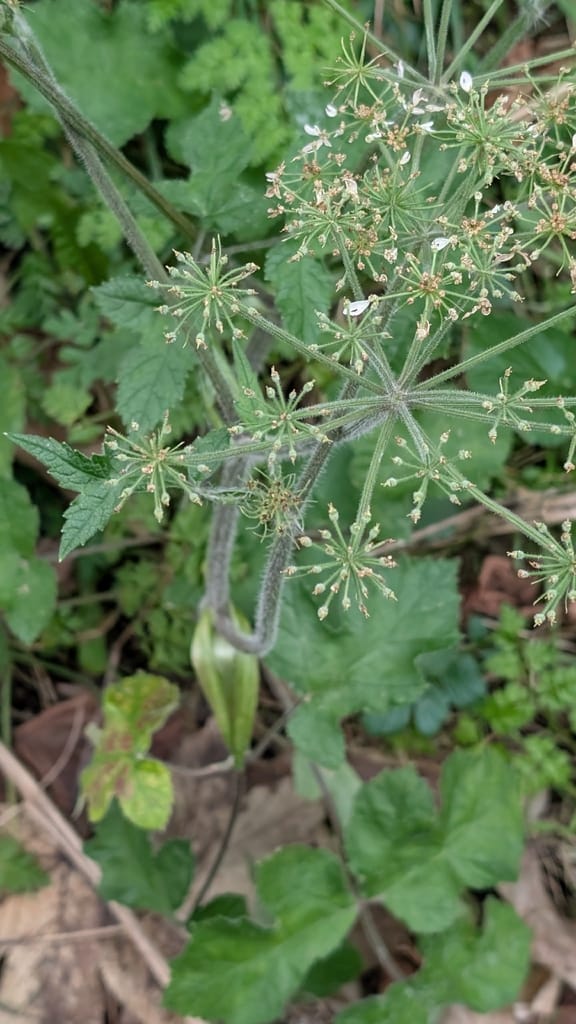
A towering plant, usually 1.5–3 m tall but sometimes taller. Stem single, very thick and hollow, with bristly hairs and many red to reddish-brown blotches. Leaves huge (often over 1 m), in three main pointed sections with sharply toothed edges. Flower heads are enormous, flat-topped, many-branched clusters over 50 cm across, white or slightly pink, often with a strong anise-like scent. After flowering the plant usually dies. Native angelicas and smaller hogweeds have much thinner stems and smaller flower heads. Flowers in Finland from June to August.
Plant group
Herbaceous plants
Habitat
herb-rich forest, yards and roadsides, shore
Toxicity
Its sap can burn the skin in sunlight – do not touch it with bare hands. Source: HUS Poison Information Centre (Finland), tel. 0800 147 111.
Flowering
Jun–Aug
About the habitat
Thrives on rich, disturbed ground such as roadsides, waste places, field edges, riverbanks and forest margins. In good sites it can form dense stands that shade out other plants. Widespread across Finland except the northernmost Lapland.
Sources
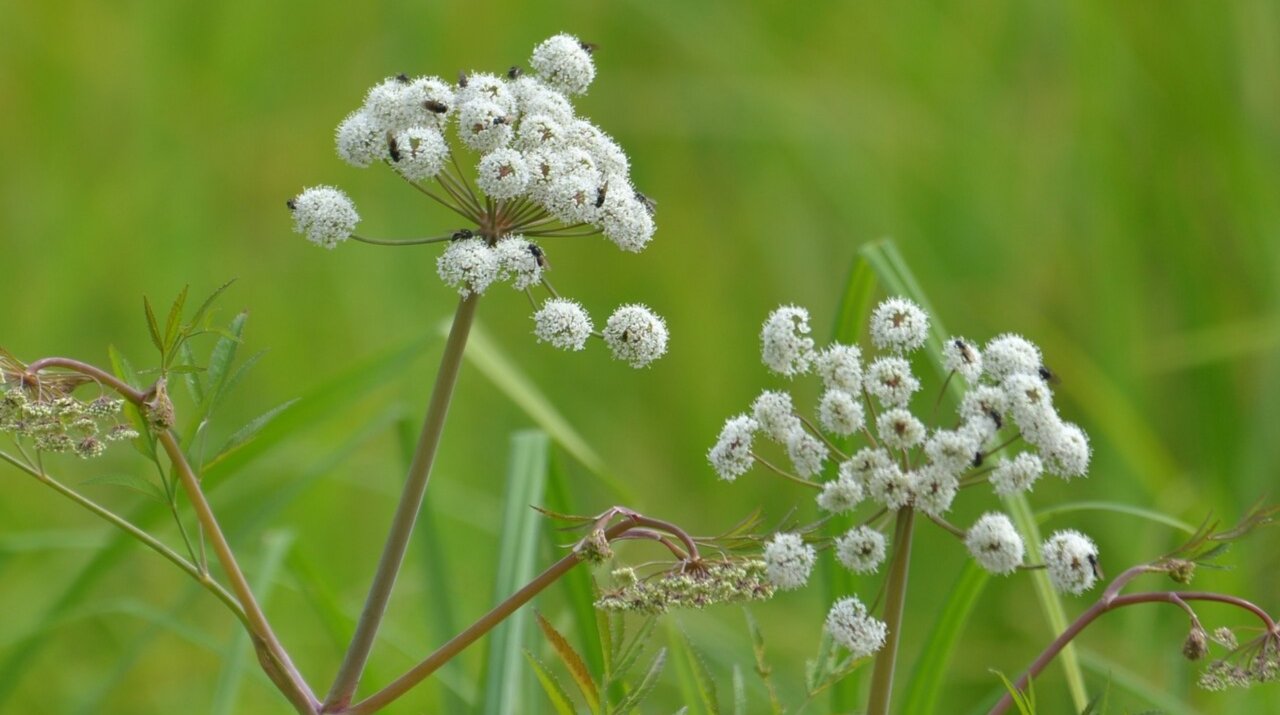
Photo: own work by Appaloosa, CC BY-SA 3.0 https://commons.wikimedia.org/wiki/File:Rbk dolde.jpg
Text: Pinkka: Vieraslajien tunnistus - Jättiputket, CC BY 4.0 https://laji.fi/taxon/MX.39254
Text: FinBIF species descriptions, CC BY 4.0 https://laji.fi/taxon/MX.39254
Text: Wikipedia (Finnish), CC BY-SA 4.0 https://fi.wikipedia.org/wiki/Kaukasianj%C3%A4ttiputki