 Suomi
 Svenska
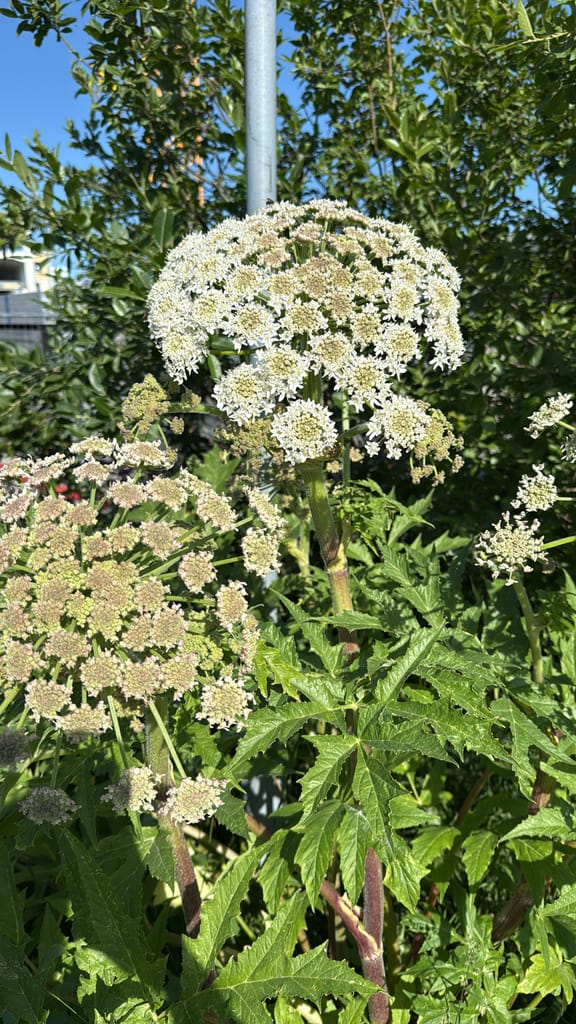
Persian hogweed
Heracleum persicum
Identify the Persian hogweed from a photo and log your finds with Florapass.
Coming soon to the App Store and Google Play.
Invasive alien species – remove it if you can
Persian hogweed is a very large, long‑lived plant from Iran and nearby regions, once planted as a garden ornamental and now invasive in parts of Europe. It can tower over people with huge divided leaves and giant white flower heads. Its sap can react with sunlight and burn the skin. In the EU it is listed as a banned invasive species.
Did you know?
- In Norway it is nicknamed “Tromsø palm” after it spread from plantings in the 1800s.
- Crushed plants have a strong anise-like smell.
About the species
Identification
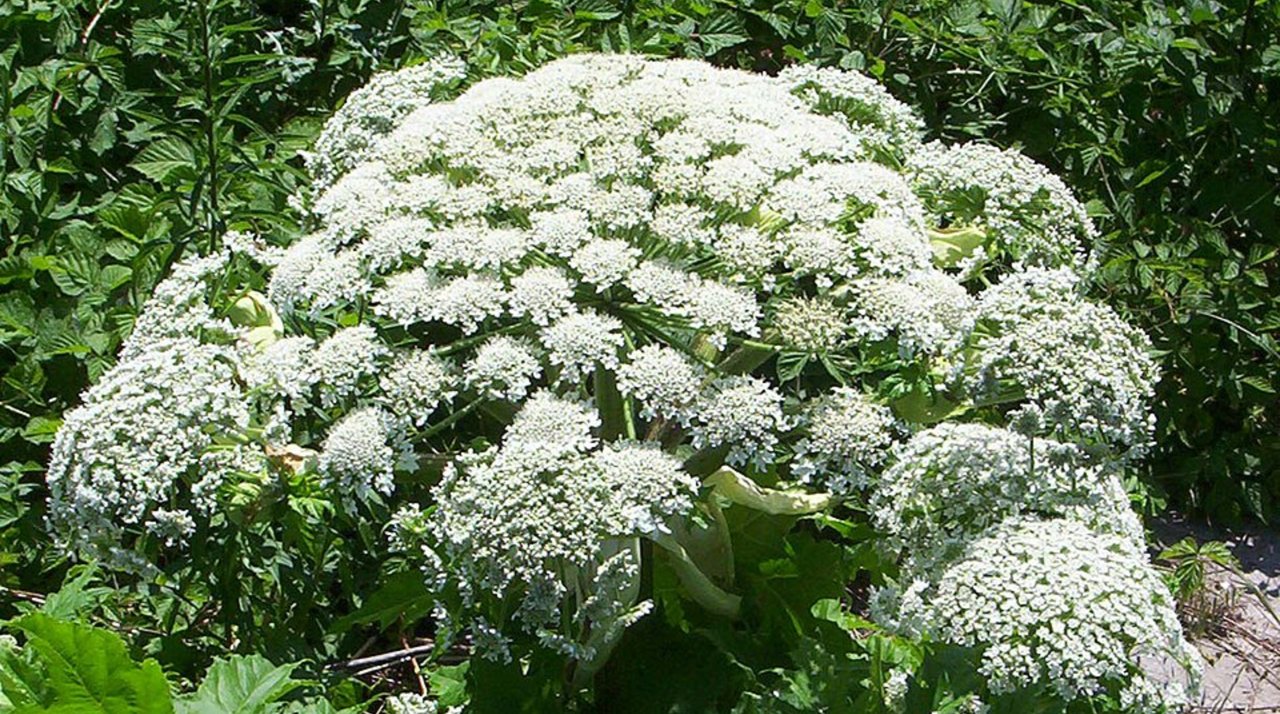
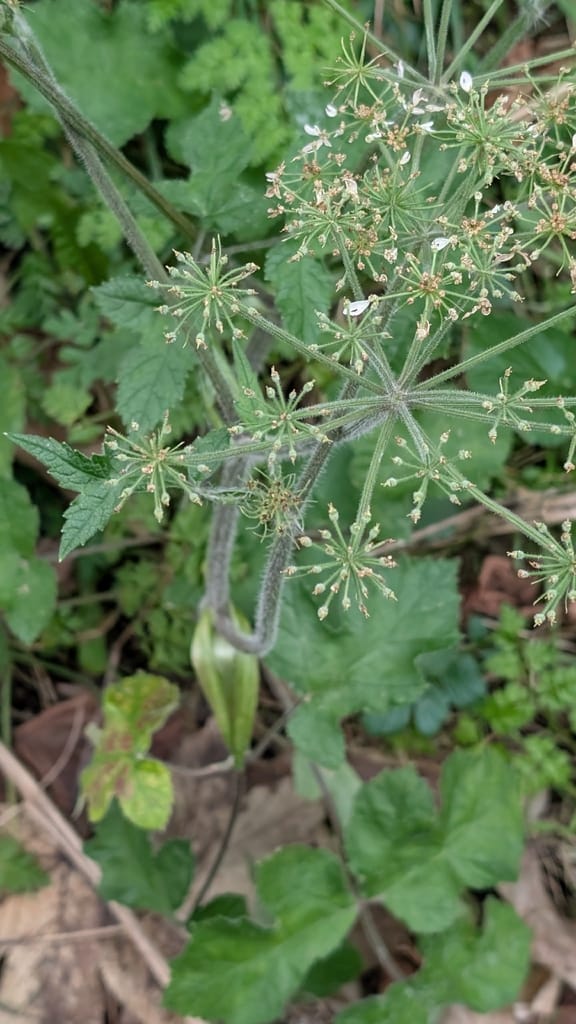
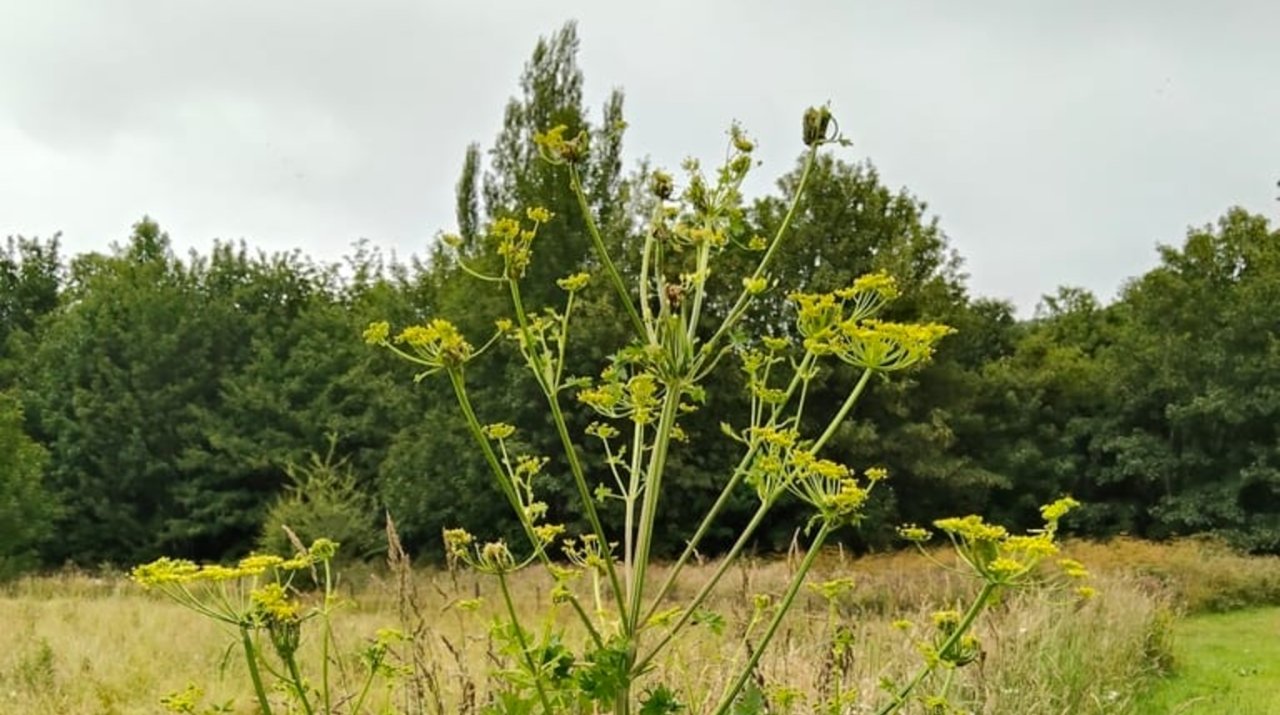
Massive plant, usually 2–4 m tall, often with several thick, hairy stems that are mostly purple or reddish-brown low down. Leaves are huge, divided into several broad, toothed segments. Flower heads are very large, branched, slightly domed clusters of many small white or pale pink flowers, sometimes over 50 cm across, with a strong anise-like scent. Compared with Caucasian or Armenian giant hogweed, it often has several stems and the stem is evenly purplish rather than green with red spots. Far larger than native angelicas and common hogweeds, whose stems are only 2–3 cm thick. In Finland it flowers from June to August.
Plant group
Herbaceous plants
Habitat
herb-rich forest, yards and roadsides, shore
Toxicity
Its sap can burn the skin in sunlight – do not touch it with bare hands. Source: HUS Poison Information Centre (Finland), tel. 0800 147 111.
Flowering
Jun–Aug
About the habitat
Grows on rich, moist ground in open or half-shaded places such as roadsides, waste ground, riverbanks, field edges and woodland edges. Often escapes from gardens and spreads with moved soil and garden waste; seeds stay viable in the soil for years. Mainly in southern Finland; also recorded as far north as Rovaniemi and Ylitornio. Scarcer in the wild than Caucasian giant hogweed; many stands are garden remnants and spread locally.
Sources
Photo: Geert Barentsen, CC BY 4.0 https://www.gbif.org/occurrence/6441029757
Text: Pinkka: Vieraslajien tunnistus - Jättiputket, CC BY 4.0 https://laji.fi/taxon/MX.39253
Text: FinBIF species descriptions, CC BY 4.0 https://laji.fi/taxon/MX.39253
Text: Wikipedia (Finnish), CC BY-SA 4.0 https://fi.wikipedia.org/wiki/Persianj%C3%A4ttiputki