 Suomi
 Svenska
Bitter Dock
Rumex obtusifolius
Identify the Bitter Dock from a photo and log your finds with Florapass.
Coming soon to the App Store and Google Play.
Alien species
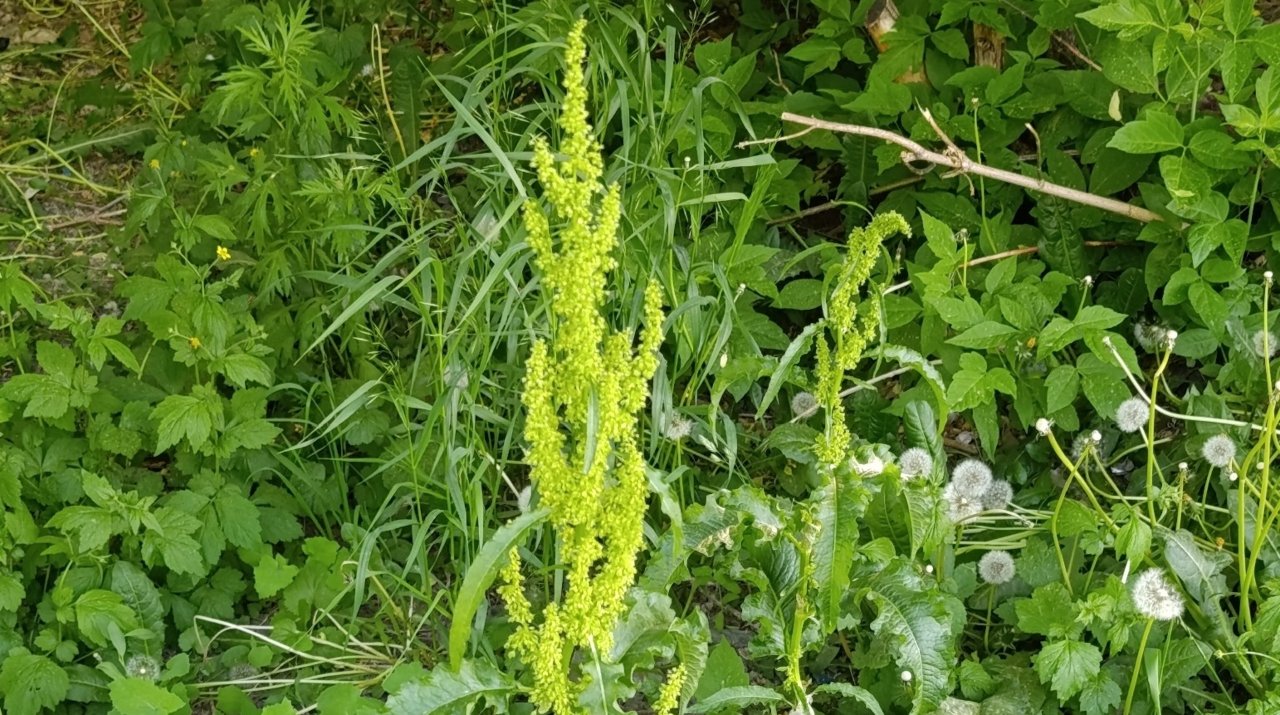
Bitter Dock is a tall, robust perennial in the knotweed family with broad, blunt‑tipped, heart‑based leaves. It is commonly seen in temperate regions on nutrient‑rich, disturbed ground from spring through autumn, with its tall, reddish‑brown seed stalks often persisting into winter. Flowering is typically from late spring to summer. As with many docks, it contains oxalates and may be harmful to livestock if eaten in large amounts.
Did you know?
- Its scientific name, obtusifolius, means blunt‑leaved, referring to the rounded leaf tips.
- Forms can vary in the shape and hairiness of the fruiting valves (the enlarged inner flower parts around the seeds).
About the species
Identification
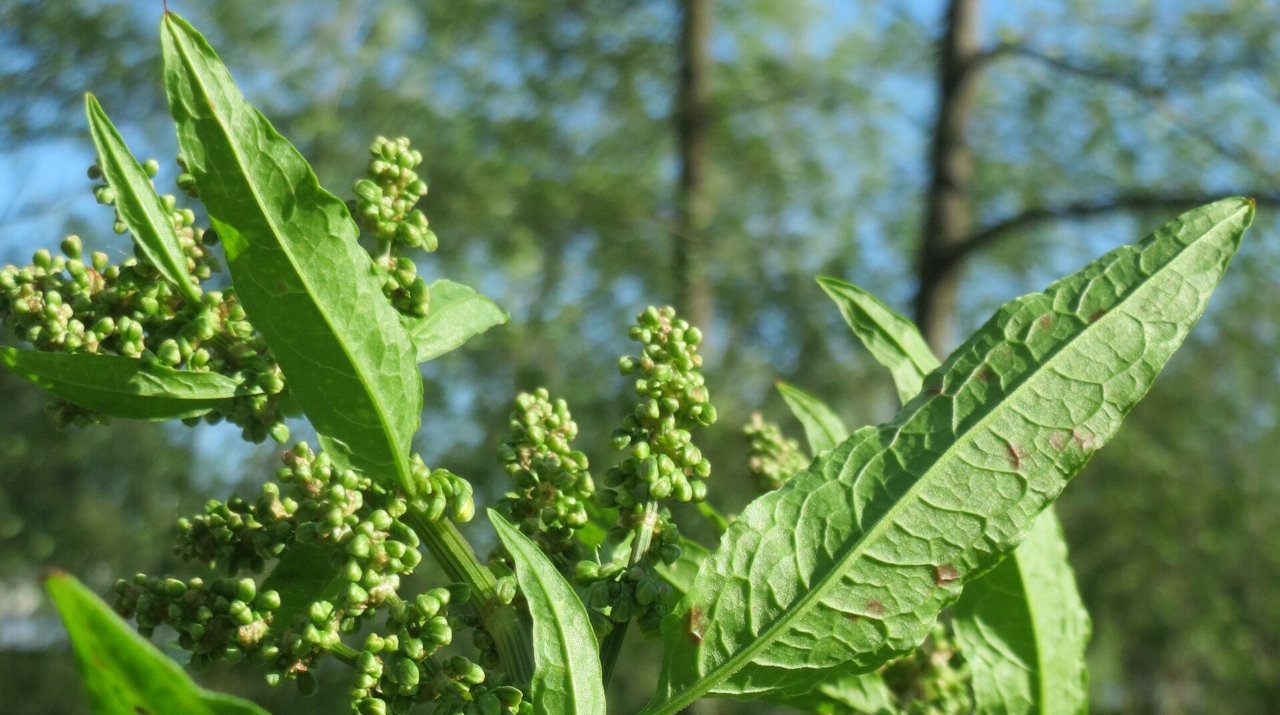
A perennial herb 50–150 cm tall with a large basal rosette of broad leaves (about 8–25 cm long and 4–12 cm wide) that are nearly smooth, heart‑shaped at the base, and blunt at the tip; upper stem leaves are smaller. Stems are erect and carry long, branched panicles of many small, greenish flowers that turn reddish‑brown as the seeds develop. Fruits are small triangular achenes enclosed by three enlarged, heart‑shaped valves, often giving dense, rusty seed clusters that persist. Distinguished from similar docks like Curly Dock by its broad, blunt‑tipped leaves rather than narrow, wavy ones; flowers in late spring to summer.
Plant group
Herbaceous plants
Habitat
meadow, yards and roadsides
Flowering
Jun–Aug
About the habitat
Grows in moist, nutrient‑rich soils of meadows, pastures, riverbanks, field margins, roadsides, and other disturbed or waste places.
Sources
Photo: AnRo0002, CC0 https://commons.wikimedia.org/wiki/File:20150506Rumex obtusifolius2.jpg
Text: Wikipedia (Finnish), CC BY-SA 4.0 https://fi.wikipedia.org/wiki/Tylpp%C3%B6hierakka