
 Suomi
 Svenska
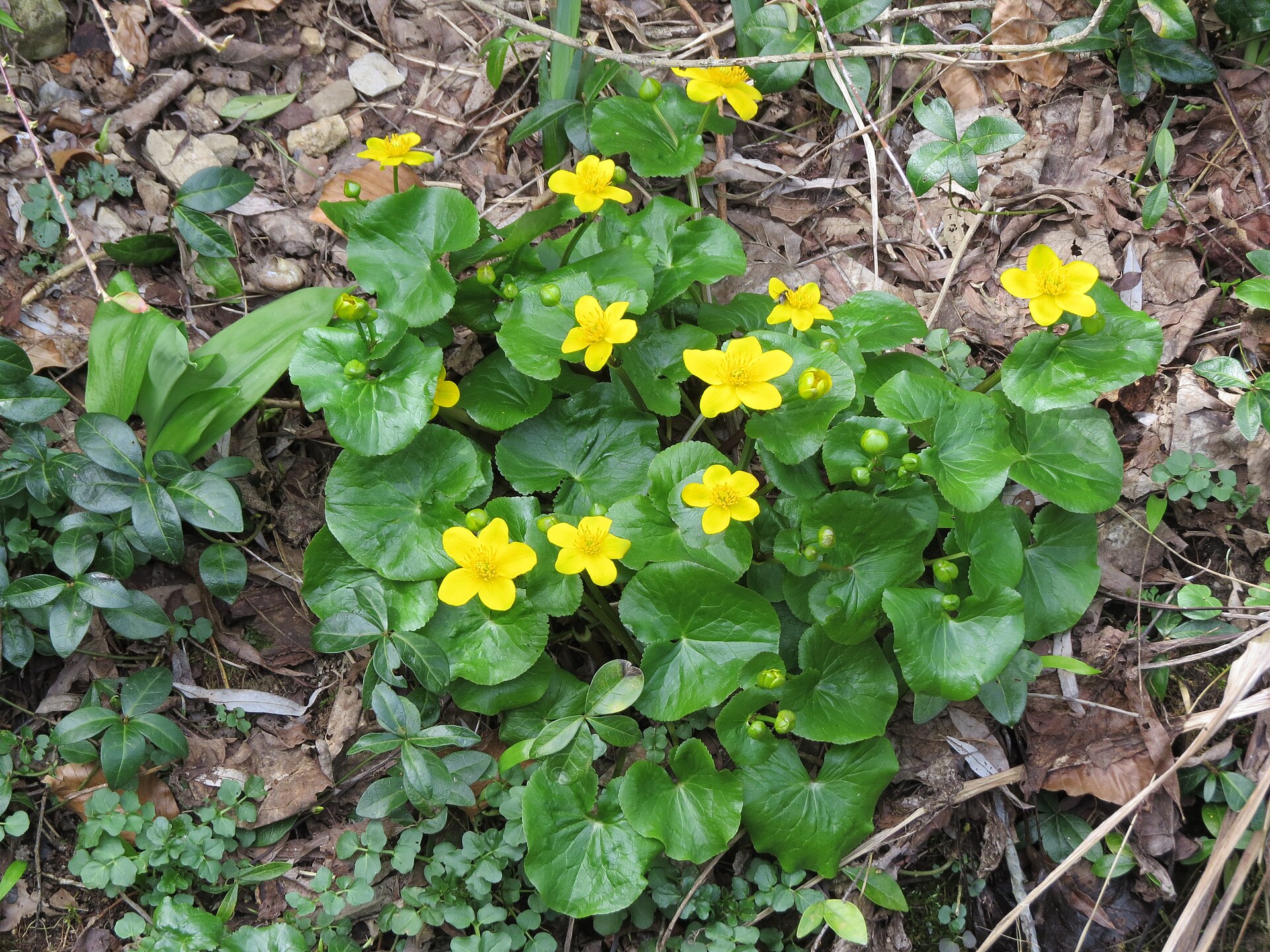
Marsh Marigold
Caltha palustris
Identify the Marsh Marigold from a photo and log your finds with Florapass.
Coming soon to the App Store and Google Play.
Marsh Marigold is a bright yellow wildflower of wetlands. It grows along streams, ponds, marshy meadows and wet woods across the cooler parts of the Northern Hemisphere. All parts are poisonous.
Did you know?
- Often one of the first big yellow flowers of spring in wetlands.
- Garden forms include a white-flowered variant and a double-flowered “pompom” type.
About the species
Identification
A 15–50 cm tall wetland plant with sturdy, hollow stems that stand upright or lean and often branch. Leaves are thick, shiny and bright green; lower ones on long stalks are round with a heart-shaped base, upper ones more kidney-shaped with slightly scalloped edges. Flower stalks carry 2–15 flowers; each is 3–5 cm across, glossy deep yellow, usually with five broad petal-like parts. Later it bears many small, narrow pods that split to release seeds. Distinguish from lesser celandine, which has many thin petals; marsh marigold has only a few broad ones and often stands in water. Flowers in Finland in May–June.
Plant group
Herbaceous plants
Habitat
yards and roadsides, shore
Toxicity
A poisonous plant – do not taste it. Source: HUS Poison Information Centre (Finland), tel. 0800 147 111.
Flowering
May–Jun
About the habitat
Lives at the edges of water: river and stream banks, ditches, wet meadows and floodplain woods. In clear streams and springs it may even grow with its stems under water. Common almost throughout the country, rare in northern Lapland; a stream form occurs in Lapland and is rare in Kainuu and North Karelia.
Sources
Photo: GT1976, CC BY-SA 4.0 https://commons.wikimedia.org/wiki/File:2018-04-09 (120) Caltha palustris (marsh-marigold) at Bichlhäusl at Haltgraben in Frankenfels.jpg
Text: Pinkka: BIO-503 Suomen kasvisto ja kasvillisuus - Sisävedet: rantaniityt, CC BY 4.0 https://laji.fi/taxon/MX.37863
Text: Wikipedia (Finnish), CC BY-SA 4.0 https://fi.wikipedia.org/wiki/Rentukka
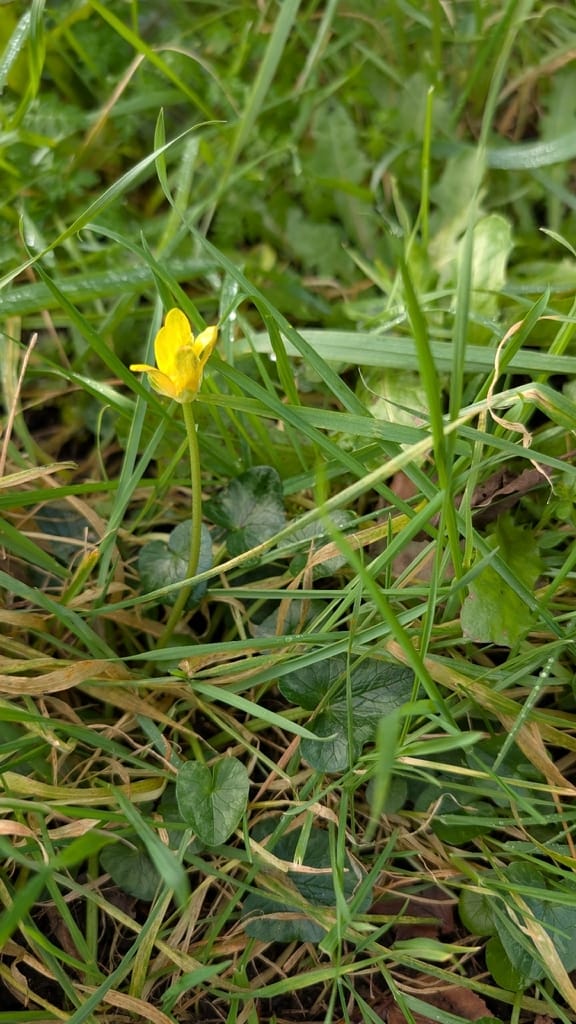
 Caltha palustris (marsh-marigold) at Bichlhäusl at Haltgraben in Frankenfels.jpg)