 Suomi
 Svenska
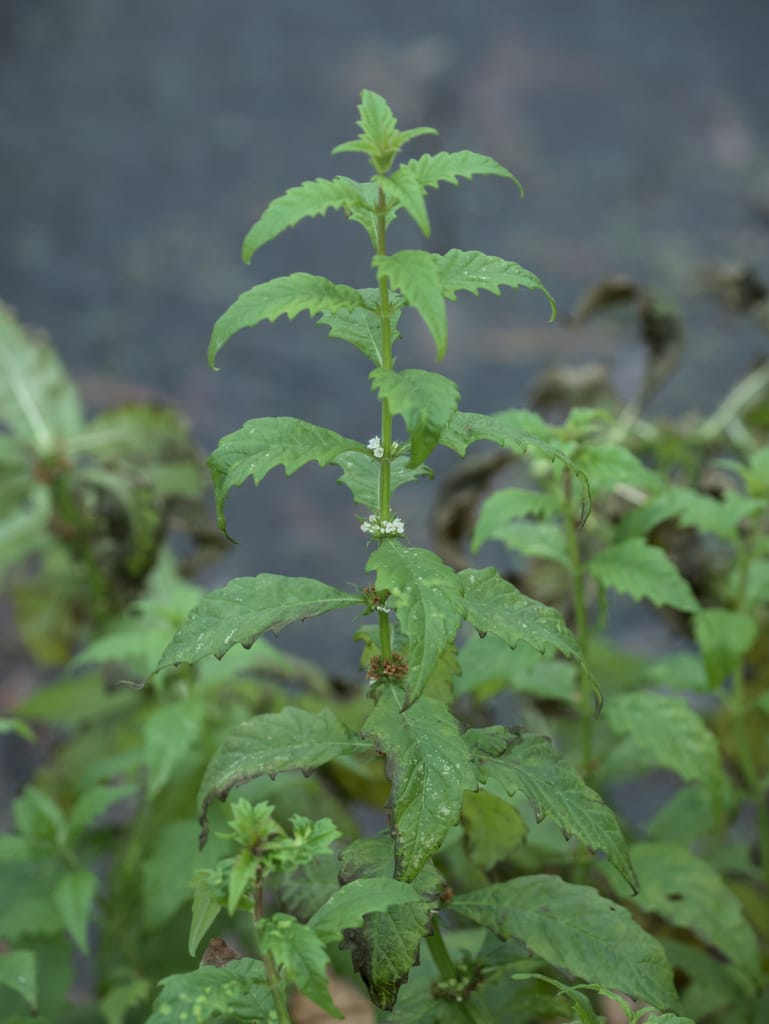
European bugleweed
Lycopus europaeus
Identify the European bugleweed from a photo and log your finds with Florapass.
Coming soon to the App Store and Google Play.
European bugleweed is a perennial waterside plant, a mint relative with tiny white, pink‑speckled flowers. It is most often seen along muddy shores, ditches and streams, and sometimes standing in shallow water, across much of Europe and western Asia; it has also been introduced elsewhere.
Did you know?
- The tiny white flowers are freckled with red and sit in tight rings where each pair of leaves meets the stem.
- People once boiled this plant with iron to make a black dye.
About the species
Identification
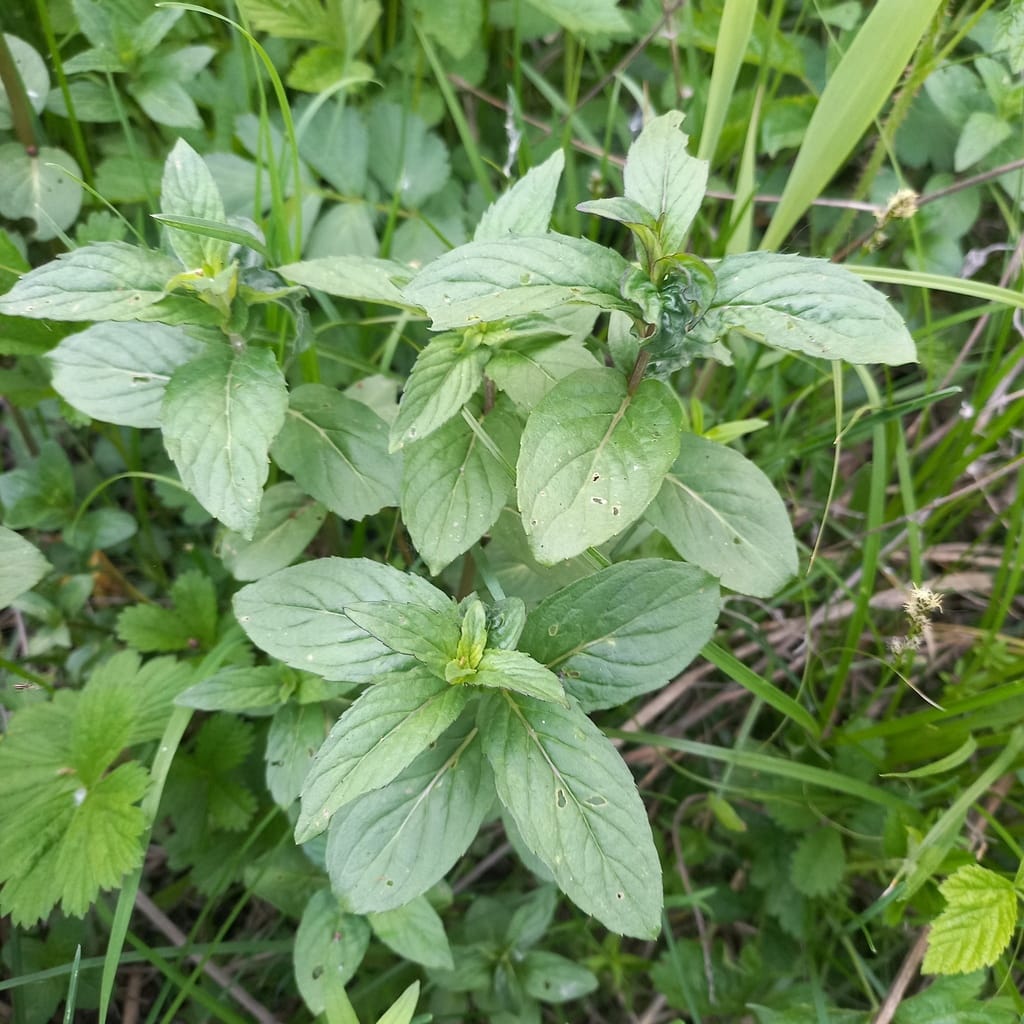
Perennial 20–80 cm tall. The upright stem is usually unbranched, square with four edges, softly hairy and often reddish at the base. Leaves come in pairs on the stem, narrow‑oval, with big teeth and sometimes small side lobes; with short or no stalk. The tiny white flowers (about 4 mm) have an upper and a three‑lobed lower lip, speckled red, and sit in tight clusters around the stem where each leaf pair joins it; the small leaves under the clusters look like the rest. The fruit breaks into four small hard pieces. Differs from many mints with a top spike: this plant has flower rings at the leaf joints and narrow, strongly toothed leaves. Flowers in Finland from July to August.
Plant group
Herbaceous plants
Habitat
shore
Flowering
Jul–Aug
About the habitat
Wet places such as river and lake shores, rich wet woodland, stream banks and ditches; sometimes growing in shallow water. Common in southern Finland, rare in central Finland.
Sources
Photo: Daniel Cahen, CC BY 4.0 https://www.gbif.org/occurrence/5938560481
Text: Pinkka: A Pohjolan kasveja - Laburnum-Luzula, CC BY 4.0 https://laji.fi/taxon/MX.39518
Text: Wikipedia (Finnish), CC BY-SA 4.0 https://fi.wikipedia.org/wiki/Rantayrtti