 Suomi
 Svenska
Alkali-blite
Oxybasis rubra
Identify the Alkali-blite from a photo and log your finds with Florapass.
Coming soon to the App Store and Google Play.
Alien species
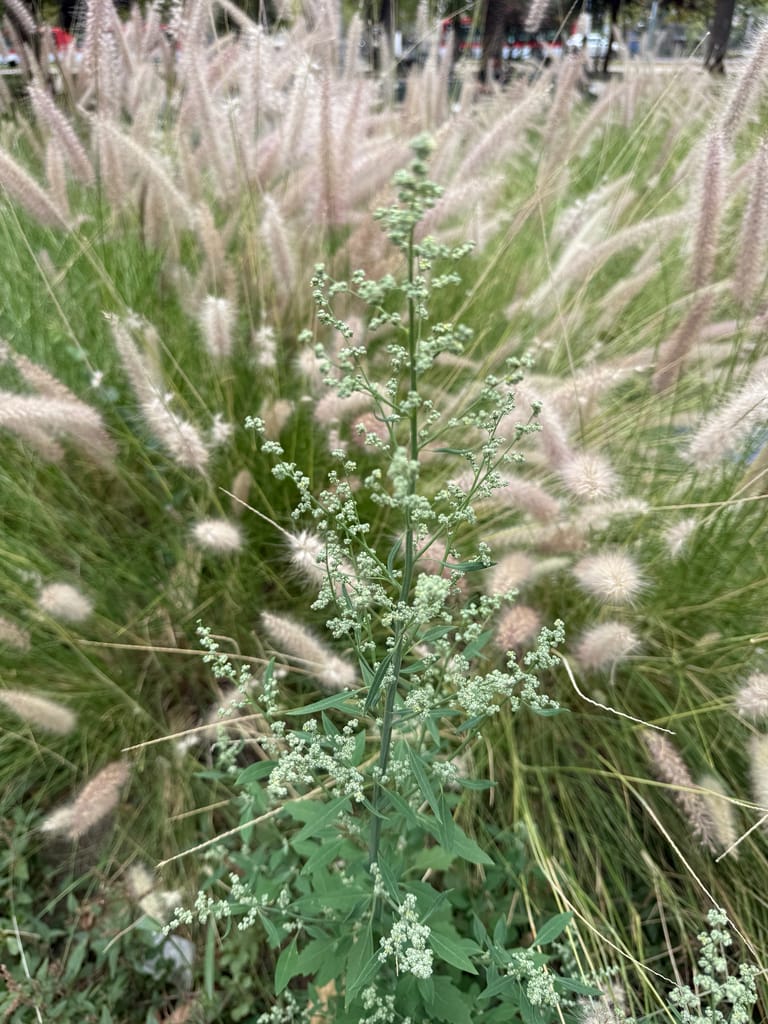
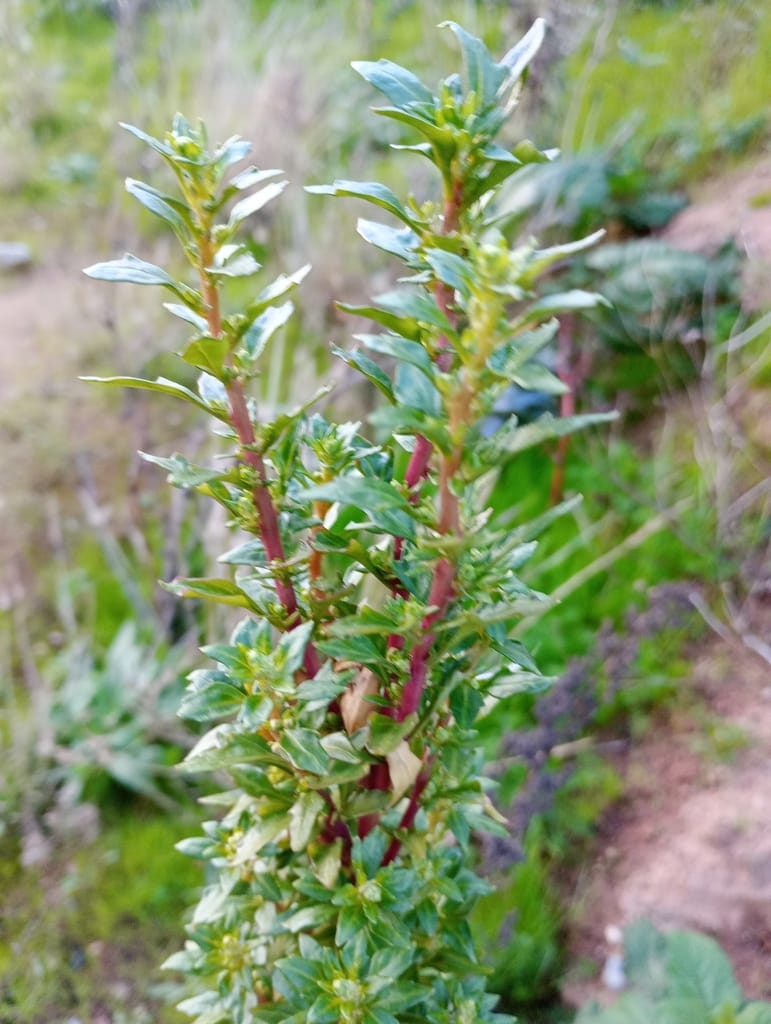
Alkali-blite is an annual herb in the goosefoot group, seen widely across temperate parts of Eurasia and also found in regions of Africa and the Americas. It favors human-disturbed, nutrient-rich ground such as gardens, fields, and urban waste places, appearing through the growing season. Plants range from small to medium height with yellowish, erect to ascending stems, and the foliage can be green to strikingly red. Flowering typically occurs from summer into early autumn in dense, spike-like clusters of tiny flowers.
Did you know?
- Alkali-blite has often been listed under the older name Chenopodium rubrum.
- Its species epithet “rubra” refers to the reddish tones the plant often develops in its leaves and stems.
About the species
Identification
An annual herb 5–70 cm tall with yellowish, erect to ascending, often branched stems. Leaves are alternate, somewhat thick, variable in shape from triangular-ovate to squarish-ovate, and irregularly lobed or coarsely toothed—especially near the base; foliage may be green to red. Inflorescences are leafy and usually spike-like, made of tight clusters of very small, greenish flowers; the uppermost flowers are bisexual, many others are female. Fruits are tiny and enclosed by the persistent flower segments, with small reddish-brown seeds. The combination of red-tinged foliage, irregularly lobed leaves with sharp teeth, and dense, spike-like clusters helps distinguish Alkali-blite from similar goosefoots; it typically flowers from summer into early autumn.
Plant group
Herbaceous plants
Habitat
yards and roadsides
Flowering
Jul–Oct
About the habitat
Grows on nutrient-rich, disturbed soils in cultural habitats, including gardens, farmed ground, and urban areas such as rail yards, port grounds, dumps, and newly sown verges and plantings. It readily appears where soil is moved or enriched with organic material.
Sources
Photo: Karen Fry, CC BY 4.0 https://www.gbif.org/occurrence/5938430919
Text: Wikipedia (Finnish), CC BY-SA 4.0 https://fi.wikipedia.org/wiki/Punasavikka